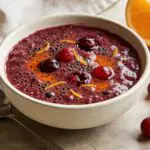



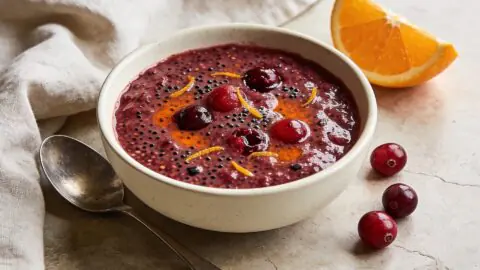
We’re simmering whole cranberries with orange and maple, then stirring in a spoonful of chia. Make it ahead, chill it and bring out that bright, tart-sweet side when dinner is ready.

We’re making the day-after plate a little less guesswork with four numbers for chilling, storing and reheating Thanksgiving leftovers. We’ll show you what to do from the dinner table through Monday.
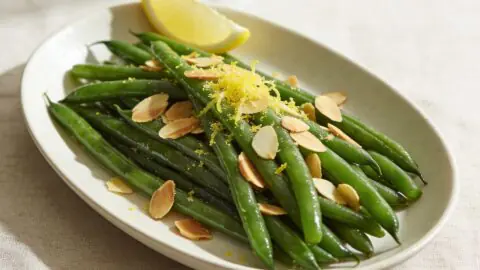
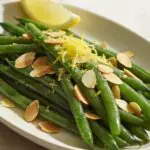
We’re making crisp-tender green beans with fresh lemon and toasted almonds, all on the stovetop. It’s the 20-minute side we reach for when the oven is already full.
Vitamin D for Women: The Complete Guide to Stronger Muscles, Healthier Bones, and the Winter Problem If you train regularly, eat well, and still feel like your energy and strength are not quite where they should be, vitamin D is worth a look. It is one of the few vitamins that affects your muscles, your bones, and your immune system all at once, and it is also one of the easiest to run low on — especially in winter, when the sun is weak and most of us spend our days indoors. Our Best Vitamins for Muscle Growth hub gives vitamin D one line: it supports muscle strength and function. This guide goes much deeper — how much you need, which foods carry real amounts, why winter is the hard season, how to know if you are low, and when a supplement makes sense — all with numbers from the NIH Office of Dietary Supplements. What Vitamin D Actually Does Vitamin D is a fat-soluble vitamin, which means your body stores it in fat and absorbs it best alongside food that contains some fat. It is unusual among vitamins because your body can also make it: when ultraviolet (UV) rays from sunlight hit bare skin, they trigger vitamin D production. According to the NIH Office of Dietary Supplements, vitamin D helps your body absorb calcium, one of the main building blocks for strong bones. Together with calcium, it helps protect you from osteoporosis, a condition that thins and weakens bones and makes them more likely to break — a real concern for women, since millions of older women are living with osteoporosis or at risk of it. But vitamin D does more than look after bones: your muscles need it to move, your nerves need it to carry messages between your brain and your body, and your immune system needs it to fight off bacteria and viruses. For women who train, the muscle connection matters most. A shortage of vitamin D may lead to weak, painful muscles, and a real deficiency in adults can cause osteomalacia, a disorder that brings bone pain and muscle weakness. A supplement will not magically add strength — training, protein, and sleep do that — but being low can quietly work against your progress in the gym. Our complete Strength Training for Women guide covers the training side; this post covers the nutrition side. One honest note on mood: some studies link low vitamin D levels with a higher risk of depression, but clinical trials show supplements do not prevent or ease depression symptoms. Do not count on a supplement to fix your mood or energy — that is a conversation for your doctor, not a vitamin bottle. How Much Vitamin D Do You Need? The amount of vitamin D you need each day depends on your age. The NIH Office of Dietary Supplements publishes the recommended dietary allowances (RDAs) set by the Food and Nutrition Board, and they are the same for women and men: Life stage Recommended amount Women 19–70 years 15 mcg (600 IU) Women 71 years and older 20 mcg (800 IU) Pregnant or breastfeeding women 15 mcg (600 IU) One microgram (mcg) equals 40 IU, so 15 mcg is 600 IU and 20 mcg is 800 IU. These amounts meet the needs of nearly all healthy people, and they assume minimal sun exposure — exactly the situation most of us are in during winter. There is also a ceiling. The tolerable upper intake level (UL) for adults 19 and older is 100 mcg (4,000 IU) per day from all sources combined — food, drinks, and supplements. That is a safety limit, not a target. More is not automatically better, and your doctor may only recommend doses above that limit for a short time to treat a confirmed deficiency. One labelling note: the Daily Value on food labels is 20 mcg (800 IU), a reference number, not the RDA — so do not be confused if a carton shows a different number from the ones above. The Best Food Sources of Vitamin D Here is the awkward truth about vitamin D and food: very few foods naturally contain it. According to the NIH, fortified foods provide most of the vitamin D in American diets. That is why the list below is a mix of a few strong natural sources and a lot of fortified everyday foods. Amounts are from the NIH Office of Dietary Supplements. Food Serving Vitamin D Cod liver oil 1 tablespoon 1,360 IU (34 mcg) Trout (rainbow), farmed, cooked 3 ounces 645 IU (16.2 mcg) Salmon (sockeye), cooked 3 ounces 570 IU (14.2 mcg) Mushrooms, white, exposed to UV light 1/2 cup sliced 366 IU (9.2 mcg) Milk, fortified 1 cup 120 IU (2.9 mcg) Soy, almond, or oat milk, fortified 1 cup 100–144 IU (2.5–3.6 mcg) Breakfast cereal, fortified 1 serving 80 IU (2 mcg) Sardines, canned in oil 2 sardines 46 IU (1.2 mcg) Egg, large 1 scrambled 44 IU (1.1 mcg) Beef liver 3 ounces 42 IU (1 mcg) Tuna, light, canned in water 3 ounces 40 IU (1 mcg) Cheddar cheese 1.5 ounces 17 IU (0.4 mcg) A few things to notice. Fatty fish — trout, salmon, tuna, and mackerel — are among the best natural sources, and one serving of salmon covers almost the whole daily target. Milk is fortified with about 120 IU per cup, and many plant-based milks are fortified to a similar level, but cheese and ice cream usually are not. In practice, most women get vitamin D from a combination: a fortified food or two each day, plus fish once or twice a week, plus whatever sun they get. Our Weight Gain Food List for Women has more ideas for building these foods into everyday meals, and our High-Protein Recipes for Women includes salmon, tuna, and egg dishes that pull double duty for protein and vitamin D. The Sun, and Why Winter Changes Everything Your body makes vitamin

We’re taking balance practice to the kitchen counter with four supported moves you can do in ten minutes. We’ll show you how to make each move easier without giving up your handhold.
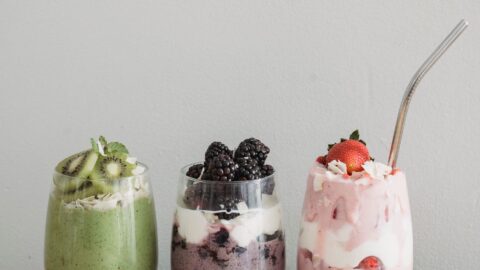
Weight Gain Smoothies for Women If you have ever felt too full to eat another bite but still needed more calories, smoothies are the answer. Drinking your calories is much easier than chewing them, and a well-built shake can carry 600 to 800 calories in a single glass that goes down in minutes. This is a full guide, not just a list of recipes. We will show you the formula for building a high-calorie smoothie, the calorie and protein targets to aim for, the best times to drink one, dairy-free and vegan swaps, and the mistakes that turn a great shake into a sugar bomb. Then you will get seven brand-new recipes with calories and protein for each one. If you want even more ideas, our 2023 post on 5 Weight Gain Shake Recipes has five more, and this guide fits inside our bigger pillar on Healthy Weight Gain for Women. Why Smoothies Work for Weight Gain The hardest part of gaining weight is eating enough, and smoothies solve that problem in three ways. First, liquids are easier to get down than solid food, so you can take in a lot of calories without feeling stuffed. Second, you can pack an enormous amount of nutrition into one glass: protein, healthy fats, carbs, fruit, and even vegetables, all blended together. Third, they are fast. A smoothie takes five minutes to make, which matters on busy mornings or after a workout when you need food quickly. Smoothies also work alongside real meals rather than replacing them. Think of a shake as a calorie helper: one a day on regular days, two on days when your food intake is low. That is usually enough to create the modest surplus of 250 to 500 calories a day that drives healthy weight gain, about half a pound to a pound a week. For the full approach, see our guide on How to Gain Weight Without Junk Food, and for a full week of meals, our High-Calorie High-Protein Meal Plan for Women. The Smoothie-Building Formula Every great weight-gain smoothie follows the same five-part formula. Learn it once and you can build your own shakes forever. Start with a liquid base, about one cup: whole milk, oat milk, coconut milk, or full-fat yogurt thinned with milk. Whole milk and coconut milk carry the most calories, while water and low-fat milk carry the fewest, so choose accordingly. Add protein, aiming for 20 to 30 grams: a scoop of protein powder, half a cup of Greek yogurt, or a quarter cup of cottage cheese. Protein is what turns your smoothie from a sweet drink into a muscle-building meal. Add a healthy fat, one to two tablespoons: peanut butter, almond butter, avocado, or a tablespoon of coconut oil. Fat is the easiest way to add calories without adding volume, because it has nine calories per gram. Add carbohydrates, about half to one cup: oats, a banana, or frozen mango. Carbs give the shake substance and fuel your workouts. Finish with extras for flavour and nutrition: a tablespoon of chia seeds, hemp seeds, or ground flaxseed, a drizzle of honey or maple syrup, cocoa powder, cinnamon, or a handful of spinach. Spinach blends invisibly and adds iron and folate without changing the taste. Calorie and Protein Targets per Shake A weight-gain smoothie should carry real calories. Aim for 500 to 800 calories and 20 to 35 grams of protein per shake. Below 400 calories, it is a snack, not a weight-gain tool. Above 1,000 calories, it starts to feel like a meal replacement, which is fine occasionally, but most women do better with a shake in the 600 to 800 range alongside regular meals. If your shake comes out too low in calories, the fix is simple: add a tablespoon of nut butter, half an avocado, or a quarter cup of oats. Each one adds roughly 100 to 150 calories. If it is too low in protein, add half a scoop of protein powder or a few spoonfuls of Greek yogurt. Keep an eye on sugar too. Fruit is wonderful, but a shake made mostly of fruit juice and sweetened yogurt can pack a lot of sugar without much protein. Balance fruit with protein and fat every time. Our Best Protein Supplements for Weight Gain compares protein powders honestly if you are choosing one. Best Times to Drink One Timing is flexible, but some moments work better than others. With breakfast is the easiest: a smoothie alongside eggs or toast turns a light breakfast into a serious one. After a workout is ideal too, because your muscles are ready for protein and your appetite is usually up. Between meals is the classic slot, especially mid-afternoon, when a shake keeps your energy up without ruining dinner. And before bed works well for women who wake up hungry or struggle with breakfast, since a slow-digesting shake with yogurt or casein-style protein gives your body fuel overnight. One tip: drink your smoothie with or just after a meal rather than right before one, so it does not spoil your appetite. And do not gulp it in thirty seconds. Sip it over ten or fifteen minutes and you will feel much better. Dairy-Free and Vegan Swaps Every recipe in this guide can be made dairy-free or fully vegan with a few simple swaps. Use oat milk, soy milk, or full-fat coconut milk instead of whole milk. Soy milk is the best vegan swap for protein, while oat milk is the creamiest and coconut milk is the highest in calories. Replace whey protein powder with pea, soy, or rice protein powder, and swap Greek yogurt for coconut yogurt or silken tofu, which blends completely smooth and adds protein. Nut butters, avocado, oats, seeds, and dates are already vegan, so most of the calorie-building ingredients need no change at all. Use maple syrup instead of honey and you are fully plant-based. If you want more vegan meal ideas, our High-Protein Recipes for Women includes plenty of