

8
servings5
minutes12
minutes60
kcal60
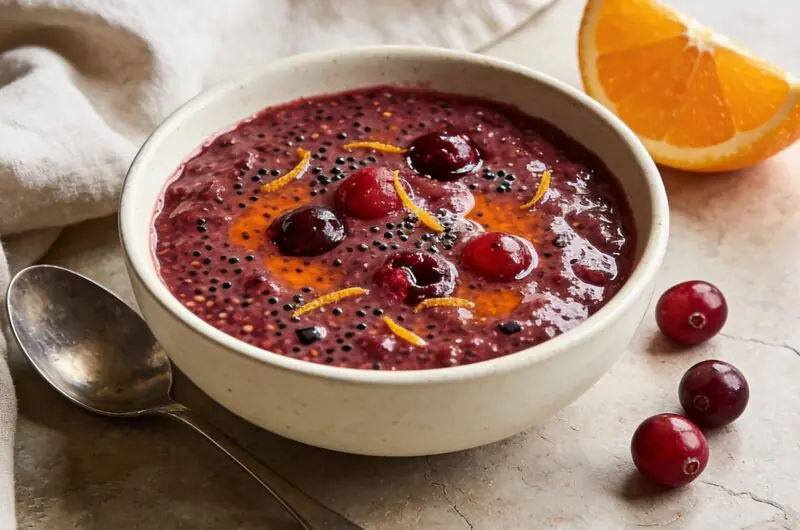
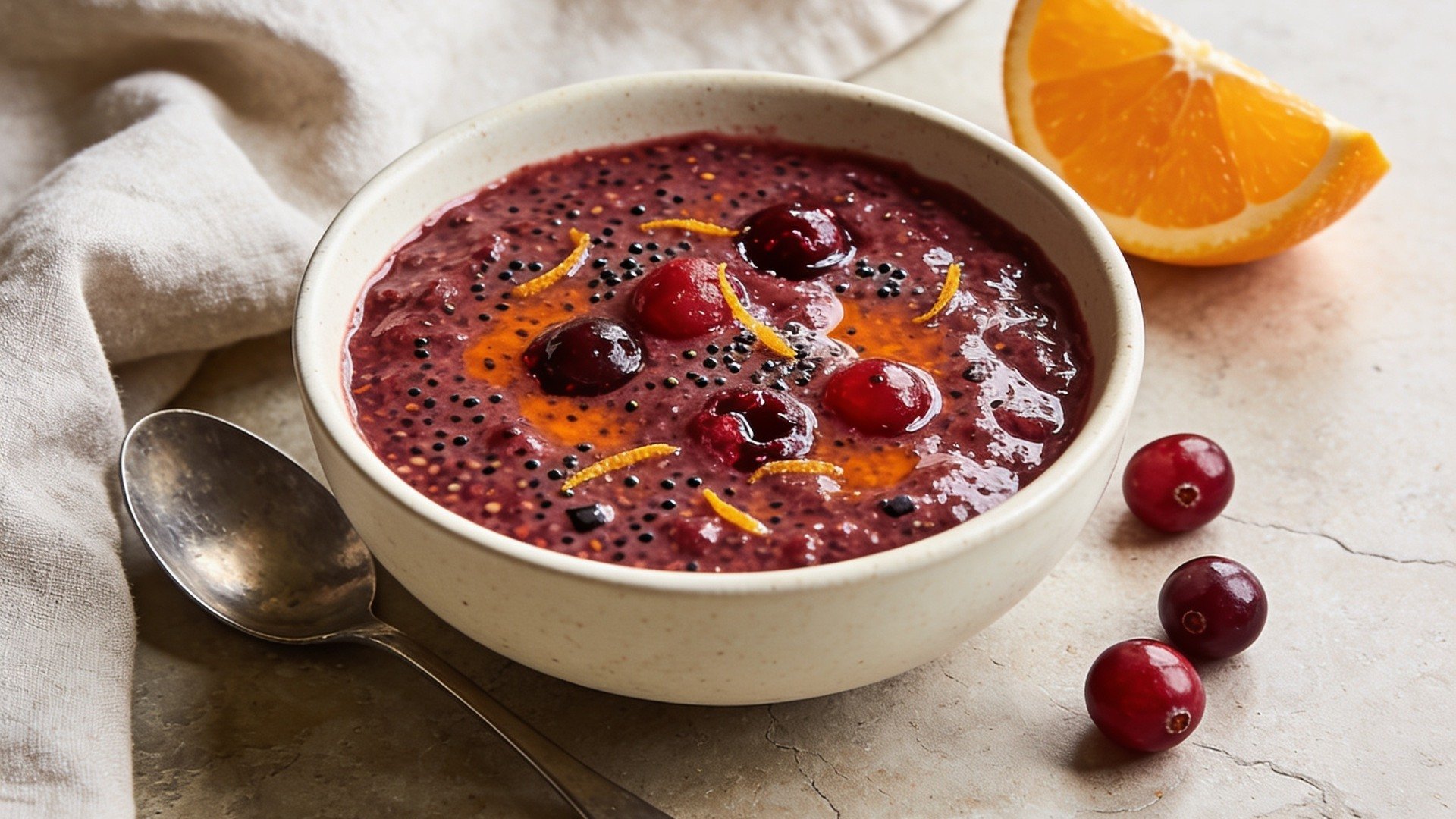
minutesWe like our cranberry sauce tart enough to cut through a rich dinner, with enough sweetness to make us go back for another spoonful. Orange zest makes this one smell like the holidays, and a little chia helps it set as it cools. Make it before the kitchen gets busy and serve it straight from the fridge.
12 ounces fresh or frozen cranberries, rinsed and picked over (no need to thaw frozen berries)
½ cup 100% orange juice (freshly squeezed or bottled)
¼ cup water
¼ cup pure maple syrup
1 teaspoon finely grated orange zest (avoid the bitter white pith)
1 tablespoon chia seeds
Bring it to a boil. Combine the cranberries, orange juice, water and maple syrup in a medium saucepan. Bring to a boil over medium-high heat, then lower to a steady simmer.
Cook until the berries burst. Simmer uncovered for 9–12 minutes, stirring occasionally. Most berries should pop and the sauce should lightly coat a spoon while still looking a bit loose. For a smoother sauce, mash some berries against the side of the pan.
Add the chia off the heat. Take the pan off the burner. Stir in the orange zest, then sprinkle the chia in gradually while stirring to prevent clumps. Let stand 10 minutes and stir again.
Chill and serve. Transfer to a clean, shallow covered container and refrigerate for at least an hour. Stir before serving. If it sets thicker than you’d like, loosen it a teaspoon at a time with cold water or orange juice.

We’re keeping the post-holiday weekend quiet with one ten-minute reset, two things to look forward to and a Sunday wind-down that leaves the evening yours.
We’re simmering whole cranberries with orange and maple, then stirring in a spoonful of chia. Make it ahead, chill it and bring out that bright, tart-sweet side when dinner is ready.

We’re making the day-after plate a little less guesswork with four numbers for chilling, storing and reheating Thanksgiving leftovers. We’ll show you what to do from the dinner table through Monday.
We’re making crisp-tender green beans with fresh lemon and toasted almonds, all on the stovetop. It’s the 20-minute side we reach for when the oven is already full.
Vitamin D for Women: The Complete Guide to Stronger Muscles, Healthier Bones, and the Winter Problem If you train regularly, eat well, and still feel like your energy and strength are not quite where they should be, vitamin D is worth a look. It is one of the few vitamins that affects your muscles, your bones, and your immune system all at once, and it is also one of the easiest to run low on — especially in winter, when the sun is weak and most of us spend our days indoors. Our Best Vitamins for Muscle Growth hub gives vitamin D one line: it supports muscle strength and function. This guide goes much deeper — how much you need, which foods carry real amounts, why winter is the hard season, how to know if you are low, and when a supplement makes sense — all with numbers from the NIH Office of Dietary Supplements. What Vitamin D Actually Does Vitamin D is a fat-soluble vitamin, which means your body stores it in fat and absorbs it best alongside food that contains some fat. It is unusual among vitamins because your body can also make it: when ultraviolet (UV) rays from sunlight hit bare skin, they trigger vitamin D production. According to the NIH Office of Dietary Supplements, vitamin D helps your body absorb calcium, one of the main building blocks for strong bones. Together with calcium, it helps protect you from osteoporosis, a condition that thins and weakens bones and makes them more likely to break — a real concern for women, since millions of older women are living with osteoporosis or at risk of it. But vitamin D does more than look after bones: your muscles need it to move, your nerves need it to carry messages between your brain and your body, and your immune system needs it to fight off bacteria and viruses. For women who train, the muscle connection matters most. A shortage of vitamin D may lead to weak, painful muscles, and a real deficiency in adults can cause osteomalacia, a disorder that brings bone pain and muscle weakness. A supplement will not magically add strength — training, protein, and sleep do that — but being low can quietly work against your progress in the gym. Our complete Strength Training for Women guide covers the training side; this post covers the nutrition side. One honest note on mood: some studies link low vitamin D levels with a higher risk of depression, but clinical trials show supplements do not prevent or ease depression symptoms. Do not count on a supplement to fix your mood or energy — that is a conversation for your doctor, not a vitamin bottle. How Much Vitamin D Do You Need? The amount of vitamin D you need each day depends on your age. The NIH Office of Dietary Supplements publishes the recommended dietary allowances (RDAs) set by the Food and Nutrition Board, and they are the same for women and men: Life stage Recommended amount Women 19–70 years 15 mcg (600 IU) Women 71 years and older 20 mcg (800 IU) Pregnant or breastfeeding women 15 mcg (600 IU) One microgram (mcg) equals 40 IU, so 15 mcg is 600 IU and 20 mcg is 800 IU. These amounts meet the needs of nearly all healthy people, and they assume minimal sun exposure — exactly the situation most of us are in during winter. There is also a ceiling. The tolerable upper intake level (UL) for adults 19 and older is 100 mcg (4,000 IU) per day from all sources combined — food, drinks, and supplements. That is a safety limit, not a target. More is not automatically better, and your doctor may only recommend doses above that limit for a short time to treat a confirmed deficiency. One labelling note: the Daily Value on food labels is 20 mcg (800 IU), a reference number, not the RDA — so do not be confused if a carton shows a different number from the ones above. The Best Food Sources of Vitamin D Here is the awkward truth about vitamin D and food: very few foods naturally contain it. According to the NIH, fortified foods provide most of the vitamin D in American diets. That is why the list below is a mix of a few strong natural sources and a lot of fortified everyday foods. Amounts are from the NIH Office of Dietary Supplements. Food Serving Vitamin D Cod liver oil 1 tablespoon 1,360 IU (34 mcg) Trout (rainbow), farmed, cooked 3 ounces 645 IU (16.2 mcg) Salmon (sockeye), cooked 3 ounces 570 IU (14.2 mcg) Mushrooms, white, exposed to UV light 1/2 cup sliced 366 IU (9.2 mcg) Milk, fortified 1 cup 120 IU (2.9 mcg) Soy, almond, or oat milk, fortified 1 cup 100–144 IU (2.5–3.6 mcg) Breakfast cereal, fortified 1 serving 80 IU (2 mcg) Sardines, canned in oil 2 sardines 46 IU (1.2 mcg) Egg, large 1 scrambled 44 IU (1.1 mcg) Beef liver 3 ounces 42 IU (1 mcg) Tuna, light, canned in water 3 ounces 40 IU (1 mcg) Cheddar cheese 1.5 ounces 17 IU (0.4 mcg) A few things to notice. Fatty fish — trout, salmon, tuna, and mackerel — are among the best natural sources, and one serving of salmon covers almost the whole daily target. Milk is fortified with about 120 IU per cup, and many plant-based milks are fortified to a similar level, but cheese and ice cream usually are not. In practice, most women get vitamin D from a combination: a fortified food or two each day, plus fish once or twice a week, plus whatever sun they get. Our Weight Gain Food List for Women has more ideas for building these foods into everyday meals, and our High-Protein Recipes for Women includes salmon, tuna, and egg dishes that pull double duty for protein and vitamin D. The Sun, and Why Winter Changes Everything Your body makes vitamin

We’re taking balance practice to the kitchen counter with four supported moves you can do in ten minutes. We’ll show you how to make each move easier without giving up your handhold.